 Psychology - Body Language
Some people seem to "just know" what others are thinking — when a colleague is upset, when a date is into them, when a deal is about to fall through. That isn't a mystical gift. It's pattern recognition built from paying attention to the right signals. Here's how to develop it deliberately, so your "gut feeling" becomes something accurate and repeatable.
Key takeaways
- Reading people is a trainable skill, not a gift.
- Combine baseline, clusters, context and the actual words.
- Deliberate practice beats gut feeling every time.
What "reading people" actually means
Reading people is the skill of inferring someone's emotional state, intentions and attitude from the signals they give off — nonverbal cues, tone of voice, word choice, and how those line up (or don't). Done well, it isn't mind-reading or snap-judging; it's forming a careful, updatable hypothesis about what's going on beneath the surface.
The 5 habits of people who read others well
1. They establish a baseline
Before drawing conclusions, they notice how a person behaves when relaxed. A naturally reserved person going quiet means nothing; a normally chatty person going quiet means a lot. Every read starts from "what's normal for this person?"
2. They read clusters, not single cues
One crossed arm, one glance, one pause proves nothing. Skilled readers wait for several signals to point the same way — face, hands, posture and voice agreeing — before they trust the read.
3. They weigh context and culture
The same behaviour means different things across situations and cultures. Reduced eye contact can be evasion, respect, shyness or fatigue. Good readers ask, "what else could explain this here?"
4. They compare words with the body
The richest information is in the gap between what's said and what's shown. "I'm fine" with a tight jaw and turned-away torso isn't fine. When words and body disagree, the body usually wins.
5. They stay curious, not conclusive
The best readers treat a read as a hypothesis to test, not a verdict. They ask a follow-up question, watch how the person responds, and update. That humility is what keeps them accurate — and stops them from stereotyping.
Where to point your attention first
You can't watch everything at once, so build up channel by channel: the eyes, the face and its microexpressions, the hands and arms, the torso, and the feet. Learn what each one signals, then layer them together. The full framework is in how to read body language.
Build the skill with the app
Reading people is a recognition skill, and recognition needs reps with feedback. Psychology - Body Language is designed to build it fast:
- Download the app free on the App Store.
- Learn gestures one body area at a time, each with an Expert Tip for real situations and the Deep Science of why people do it.
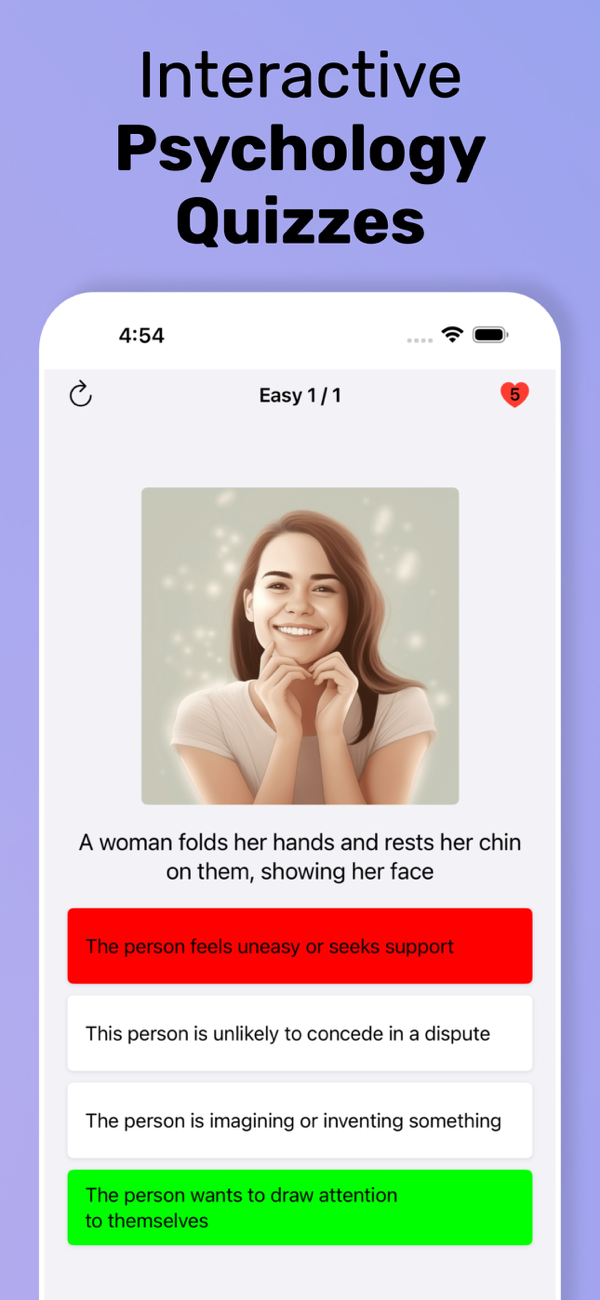
- Take the interactive quizzes — you're shown a scenario ("a woman folds her hands and rests her chin on them…") and asked what it means, with instant feedback.
- Apply one cue at a time in real life until reading people becomes second nature.
Key takeaways
- Reading people is trainable pattern recognition, not a gift.
- Baseline first, then read clusters, in context, comparing words to the body.
- Treat every read as a hypothesis you test and update.
- Build channel by channel; practise one at a time.